Hi, I’m Maria. For the past 7 years, I’ve been building internal products across FMCG and tech companies.Now, I share everything I’ve learned to help junior PMs master delivery from technical skills to stakeholder communication. Join 200+ Internal PMs who get weekly insights from the Build Internal Products newsletter.
I panicked over a deadline. Here's what changed.
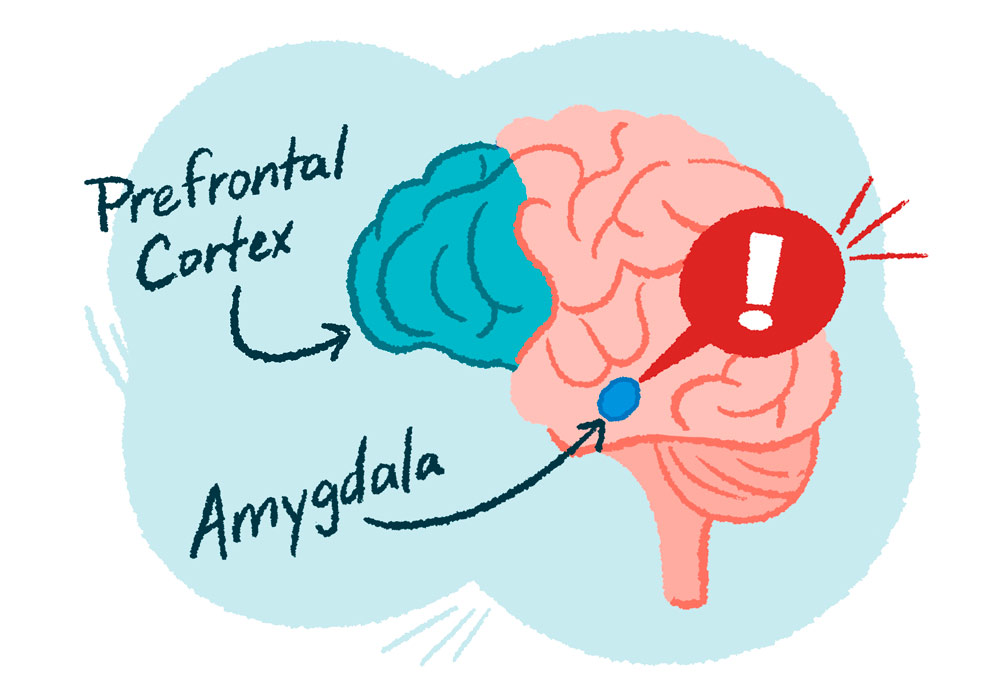
This isn't a flaw. It's your brain doing exactly what it evolved to do. The good news: a little of this is actually useful. It's why you can pull an all-nighter and still think clearly enough to ship. Performance rises with stress, up to a point. The bad news: past that point, it flips. Too much stress and your prefrontal cortex, the planning and reasoning part, starts to lose access. You get tunnel vision. You react to the last thing that happened instead of the actual problem. There's actual data on what this does to leaders specifically. In one study, 53% of leaders in crisis became more closed-minded and controlling instead of curious. 43% got angrier and more reactive. So understand this: getting paralyzed, wanting to run, your heart pounding at night, none of that is a personality flaw. It's just what stress hormones do to a brain. Including yours. Including mine. Most of us can't run away from a work problem the way we'd run from a tiger. (Also, that sounds impossible.) So there are tools people have built to deal with this instead. Methods to Deal With These SituationsI split this into two buckets. What to do in the first 60 seconds, and what to do after. Short term: get your brain back onlineYou can't think your way out of an adrenaline spike. The body has to come down first, then the mind follows. This isn't a metaphor, there's a real study behind it. Our brain influences our body: alarm sets in, heart rate spikes. But the reverse is true too. Certain body movements can signal back to the brain that everything's okay. Guess what the best tool for that is? Breathing and mindset. Here are three things you can use in the moment you're panicking. 1. Physiological sigh: two quick inhales through the nose, one long exhale through the mouth. It's called cyclic sighing, and research found it's the fastest way to reduce anxiety and improve mood, working in as little as one to three breaths, about 30 seconds. The extended exhale slows your heart rate through the vagus nerve. My favorite, especially for calming down before sleep. 2. Box breathing: inhale 4 seconds, hold 4, exhale 4, hold 4. Second best to the method above, and used by Navy SEALs before high-stakes moments. If it works for Navy SEALs, it must work for PMs as well. 3. Name it out loud, and reframe what you're feeling: "this is stress, not danger." A pounding heart means your body is mobilizing energy for something that matters to you. In other words, it's helping. Thanks for the help! None of these solve the problem. They just get your prefrontal cortex back online. Do this first, always. Long term: what to actually do once you can thinkHere's some good news: plenty of fields more critical and dangerous than product management have already figured out a framework for how to act in a crisis. It's called the OODA loop: Observe, Orient, Decide, Act. Military strategist John Boyd designed it. It's used well beyond the military now, in cybersecurity incident response, crisis management, and increasingly in business strategy. 1. Observe. – Gather what's actually true, not what you're afraid is true. – What's the real state of the deadline, the real scope of the incident. – What's working, what isn't. 2. Orient. This is the step most people skip. – Make sense of what you observed. What does it mean for the team, the timeline, the stakeholders? Your gut reaction here is often shaped by fear, not facts, so slow down here, even when everything else is fast. – What happens if the timeline slips? What are your options, your alternatives? 3. Decide. Pick a course of action. It won't be perfect. There's rarely time for perfect. It needs to be a good one you can commit to. 4. Act. – Set a drumbeat for crisis communication. – Execute. – Ask for the resources, time, or escalation you need. – Then loop back to observe again. The OODA loop isn't a one-time sequence, it's a cycle you run repeatedly until the crisis resolves. Each pass gives you better information for the next one. Here's what this looks like for a PM.
Say you find out your product is completely down for one enterprise client, right in the middle of a renewal conversation. 1. Observe: you check the status page and error logs, and confirm it's isolated to that one client's instance, not a broader outage. 2. Orient: you realize this client is mid-renewal, so timing matters as much as technical severity. You also remember your team already has a workaround for this exact class of bug from three months ago. 3. Decide: you apply the workaround immediately instead of waiting for a permanent fix. Restoring access matters more right now than doing it the "right" way. 4. Act: you loop in engineering to apply the fix, message the client's CSM with a status update and ETA, and set a 30-minute check-in to reassess. Then you observe again. Calm Leadership and How You Impact the TeamHere's the part that changes once you're leading other people, not just managing your own reaction. One of the biggest mindsets that helps me: if I don't want to do this for myself, I should do it for the benefit of others. Sometimes I'm not my own best motivation. Other people are. If you can't calm down for yourself, do it for your team. EMOTIONS ARE CONTAGIOUS Even researchers say so. If you show up in fight or flight, that spreads. Minor issues start to feel like major ones. People stop bringing you problems early, because your reaction makes it not worth it. THE COST OF A PANICKED LEADER This connects to the concept of psychological safety. The best performing teams reported more errors, not fewer. Not because they made more mistakes. Because they were the only ones who felt safe enough to talk about them. That's the real cost of a panicked leader. It's not just the mood in the room. Your team stops surfacing the information you need to catch problems early. That's exactly why last week's deadline scare went the way it did for me. CALM URGENCY, NOT FAKE CALM The goal isn't to fake calm or pretend nothing's wrong. Researchers call the useful version "calm urgency": serious, without broadcasting panic. You can say "this is important, we're moving fast" without handing your team your adrenaline spike too. Next time you're about to tell your team “oh my god, this is a disaster” — pause. Reframe it with calm urgency, not panic.
|
|


Maria Korteleva
Hi, I’m Maria. For the past 7 years, I’ve been building internal products across FMCG and tech companies.Now, I share everything I’ve learned to help junior PMs master delivery from technical skills to stakeholder communication. Join 200+ Internal PMs who get weekly insights from the Build Internal Products newsletter.
Hi Reader, You know that feeling of “you don’t know what you don’t know”? You get it always when you start building a new system or a complex feature. And you’re just thinking: how are we supposed to know how to build this if we’ve never built it before? As someone who likes to control things (yes, that’s me), I tried my best to find an answer. Of course, very predictably, there is no answer. We can’t predict many of the technical issues that will come our way. But that doesn’t mean we should...
Hi Reader, Have you ever heard of the Jobs-to-be-Done framework? You probably did. And like you, I have heard of the interpretations of it, and I thought I got it. It's an easy concept. But with the new small internal tool I am building, I have decided to actually implement it, and see if it could help me organize messy requirements into a clear picture. So if you are currently managing a product, and need some ability to actually map out what it's meant for, this newsletter is for you! P.S....
Hi Reader, Have you ever felt lost while asking your engineers if they have already pulled, pushed, or merged their code? I have 🙋🏻♀️ What if I tell you that learning this once and for all will take you only 20 mins? And much more confidence going forward. If you like that, today's issue is for you. Today in 20 minutes you will: Why code repositories matter to PMs (even if you never write code) What Git and GitHub are (and why they're not the same thing) The 9 words your developers use every...